Key Takeaways
- 62% of Oregon’s vehicle fleet is trucks and SUVs — nearly double the national car/sedan preference
- Dealerships sourcing 70% via trade-ins get 60% trucks/SUVs; those via auctions get only 35% — misalignment costs $58,050/month in lost profit
- Medford-Ashland’s aging fleet (14.5 years average, 2.3 years older than national) means high-demand used trucks/SUVs face severe national scarcity and elevated auction prices
The Regional Preference Divide: Oregon vs. National Trends
How does Southern Oregon’s geography reshape vehicle preferences and dealership profitability? It’s late October. Snow is forecast for higher elevations. A Jacksonville buyer asks: “I need something reliable for winter. What do you have?”
The salesperson doesn’t show a Honda Civic or Corolla. They show trucks and SUVs. A 2019 Ford F-150. A 2020 Toyota 4Runner. A 2021 Chevy Silverado. The buyer nods. This is what they expected to see.
This scene repeats constantly in Southern Oregon because regional truck/SUV preference isn’t marketing. It’s practical necessity rooted in geography, climate, and lifestyle.
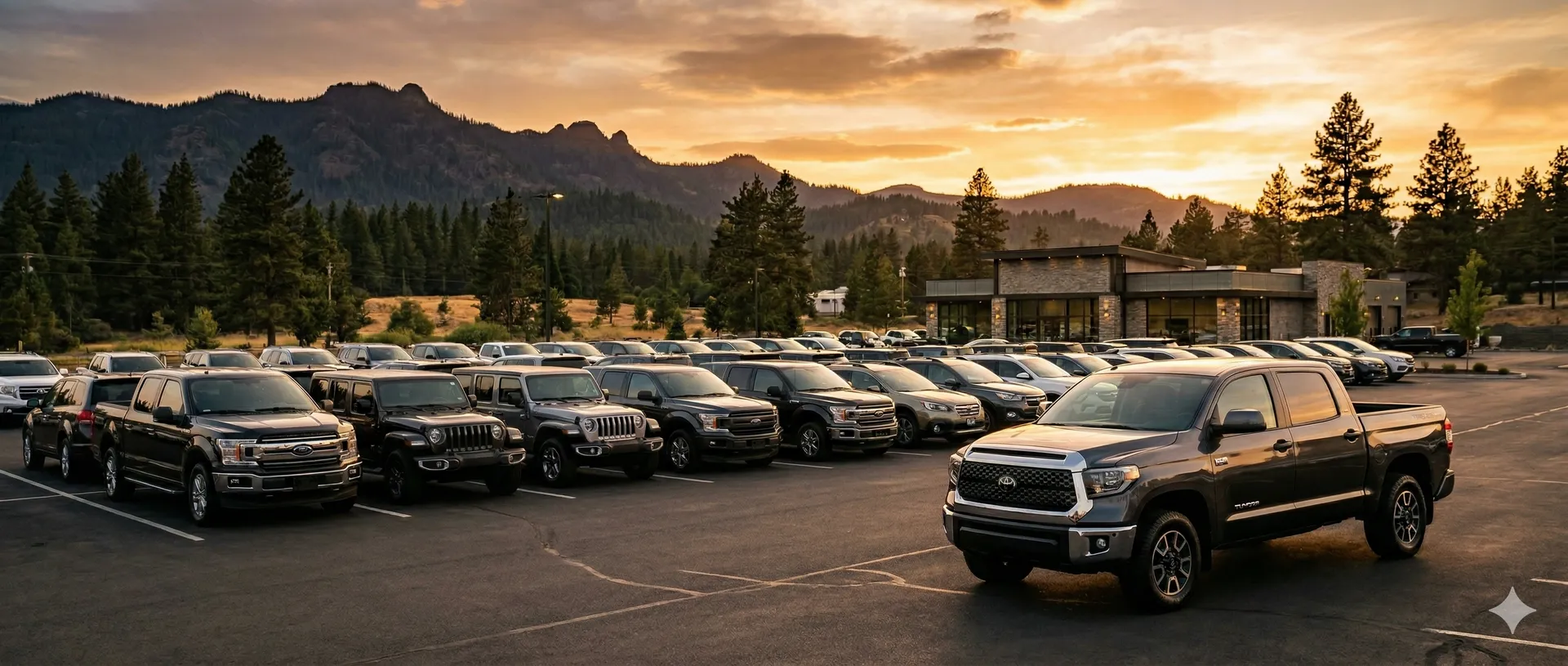
Walk any Southern Oregon lot: trucks and SUVs dominate the landscape. Ford F-150s, Ram 1500s, Toyota 4Runners, Chevy Silverados, Jeep Wranglers are visible inventory. Sedans and compact cars are afterthoughts.
What does the data show? According to Alliance for Automotive Innovation:
| Vehicle Type | % of Oregon Fleet |
|---|---|
| Utility (SUVs/Crossovers) | 38.0% |
| Pickup Trucks | 23.9% |
| Trucks + SUVs (Combined) | 61.9% |
| Traditional Cars (Sedans) | 30.2% |
| Minivans | 3.3% |
| Vans | 4.7% |
Nearly 62% of all Oregon vehicles are trucks and SUVs—nearly 2x the national sedan preference. This reflects Oregon’s geography: mountains, rural areas, unpredictable weather where larger, higher-clearance vehicles offer practical advantage.
Southern Oregon is even more extreme. Climate patterns, terrain, and outdoor recreation prevalence (fishing, hiking, camping) create truck/SUV dependency. In a region where Fourth of July brings snow to higher elevations and winter weather is unpredictable, a reliable truck or SUV is not luxury. It’s insurance.
How National Auction Supply Misaligns With Southern Oregon Demand: The Inventory Fracture
Here’s the market fracture: National wholesale auction supply doesn’t match regional demand patterns.
Auctions distribute inventory based on national aggregates. A dealership buying via auctions receives a mix aligned with national preferences. But national preferences favor cars and crossovers (driven by urban markets: California, Northeast where sedans are practical).
What this means for Southern Oregon dealers:
A dealership sourcing 50% inventory through auctions will receive:
- Disproportionate sedans, compact cars, crossovers (low demand regionally)
- Insufficient F-150s, RAM 1500s, 4Runners (high demand regionally)
- Result: Misaligned inventory sitting 50+ days; heavy discounting required to clear
Trade-in sourcing advantage: Trade-in vehicles reflect actual regional ownership patterns—vehicles customers own and want to upgrade from. A customer trading a 2012 Honda Civic might be upgrading to a truck or SUV. The vehicle they’re trading reflects what they previously owned—and regional ownership heavily skews trucks/SUVs.
Dealerships mastering trade-in acquisition get inventory aligned with regional demand. Dealerships relying on auctions get misaligned inventory.
This is why TC Chevy’s marketing “Top Dollar for Your Trade-In” isn’t customer goodwill. It’s sourcing strategy. It ensures their lot is stocked with vehicles Southern Oregon buyers actually want.
The Financial Reality: Trade-In Heavy vs. Auction Heavy Inventory Strategies
The financial impact of inventory misalignment is extreme:
| Strategy | Dealer A (Trade-In Heavy) | Dealer B (Auction Heavy) | Advantage |
|---|---|---|---|
| Sourcing mix | 70% trade-in, 30% auction | 30% trade-in, 70% auction | — |
| Inventory composition | 60% trucks/SUVs, 40% cars | 35% trucks/SUVs, 65% cars | A matches regional demand |
| Demand alignment | Excellent (62% regional demand) | Poor (misaligned) | A wins |
| Holding time (days) | 28 | 52 | A turns 2x faster |
| Monthly turns | 5.4x | 2.9x | A turns faster |
| Avg gross/vehicle | $2,025 | $1,638 | A’s margin higher |
| Monthly gross (150 units) | $303,750 | $245,700 | -$58,050 (-19.1%) |
Both dealerships move 150 vehicles monthly. Dealer B earns 19% lower profit because inventory is misaligned with regional preferences.
Holding vehicles 52 days vs. 28 days cascades into:
- Greater floor plan financing costs — $1,560/vehicle additional interest
- Higher storage and maintenance costs — $300-500/vehicle for aging inventory
- Forced price reductions — discounting misaligned vehicles to clear them
- Lower cash flow — less capital to reinvest in high-demand inventory
The math: Dealer B loses $58,050 monthly = $696,000 annually compared to aligned sourcing strategy.
Strategic insight: This single sourcing decision determines profitability more than sales ability or marketing effectiveness. Regional demand alignment is foundational.
Why Southern Oregon’s Winning Dealerships Master Trade-In Acquisition
This dynamic explains why Butler Automotive Group and TC Chevy—emphasizing trade-in acquisition—rank higher than competitors. They’re not just acquiring at better margins; they’re acquiring inventory aligned with regional demand.
TC Chevy’s marketing positioning “Top Dollar for Your Trade-In” isn’t customer goodwill. It’s strategic acquisition strategy ensuring their lot stocks vehicles Southern Oregon buyers actually want.
Result: Faster inventory turns, higher margins, lower holding costs, better profitability.
What this means for Medford-Ashland independent dealers: Master trade-in acquisition and you win the inventory velocity game—and the profitability game that follows.
The National Scarcity Multiplier: Why Budget Trucks and SUVs Are Hard to Find
The regional preference mismatch is compounded by national scarcity of affordable trucks and SUVs. National inventory data shows dealers holding only a 29-day supply of vehicles under $15,000—well below normal levels. The shortage concentrates in trucks/SUVs in budget segments.
Why is supply constrained?
- Trucks and SUVs hold value better than sedans
- Post-pandemic demand kept used trucks/SUVs in high demand
- Manufacturers’ focus on crossovers and EVs reduced traditional sedans entering the used market
- Oregon’s older fleet (14.5 years average, 2.3 years above national) means higher truck/SUV dependence
For Southern Oregon dealerships seeking affordable trucks/SUVs:
- Auction prices for these vehicles are elevated
- Inventory is limited and hard to source
- Customers willing to buy sedans are rare (only 38% regional demand)
- Competitive advantage accrues to trade-in sourcing — regional supply is more reliable than national auction supply
This is why TC Chevy’s trade-in focus is structural advantage in a tight market. When national auction supply is constrained, regional trade-in sourcing becomes non-negotiable.
How Southern Oregon’s Top Dealerships Align Inventory With Regional Preferences
Successful Southern Oregon dealerships strategically manage acquisition mix:
Butler Automotive Group Heavy truck/SUV emphasis driven by trade-in acquisition and franchise access to new-vehicle trade-in pipelines. Pre-Owned Supercenter visibly dominated by Ford F-Series and SUVs.
Rigs & Rides Smaller in scale, but inventory spotlights trucks and SUVs prominently—RAM 3500s, Ford Edges, Jeep Grand Cherokees. Curation reflects regional demand, not random sourcing.
Quality Cars Featured inventory leans heavily toward trucks and popular SUVs. Occasional sedans for customers seeking alternatives, but not as primary strategy.
The Unsuccessful Counter-Example: Dealerships stocking sedans and compact cars as primary inventory (not niche) are swimming upstream against regional preferences. They’re forced to discount aggressively to move misaligned stock.
Strategic takeaway: Inventory alignment determines profitability. Align with regional demand, or grind on margins and holding costs trying to clear misaligned vehicles.
The Aging Fleet Dynamic: Why Oregon’s 14.5-Year Average Creates Service-Based Competitive Advantage
Compounding the truck/SUV demand is Oregon’s aging vehicle fleet. Average age: 14.5 years—2.3 years older than national average. Older trucks and SUVs require more maintenance, more frequent repairs, higher service costs.
This creates a virtuous cycle for franchise dealerships with service departments:
- Older trucks/SUVs generate higher service revenue
- Service relationships create customer retention
- Service customers are high-probability candidates for next vehicle purchase
- Repeat customers purchasing trucks/SUVs sustain franchise’s inventory alignment
Independent dealerships without service operations don’t benefit. They sell a vehicle and lose contact. By the time the customer is ready to buy again, they may have developed a 3-year service relationship with a franchise dealer.
This is why franchise service departments matter: In a market dominated by older trucks/SUVs requiring frequent maintenance, franchise dealers create customer lock-in that independents cannot replicate. Service relationships become acquisition channels for next vehicle purchase.
The Brutal Economics: Same Volume, 19% Less Profit Due to Misalignment
Here’s what separates winning dealerships from those grinding on margins: sourcing the right inventory isn’t about customer preference satisfaction. It’s about profitability.
Dealer sourcing 70% via trade-ins:
- Inventory: 60% trucks/SUVs, 40% cars (matches regional demand)
- Holding time: 28 days
- Gross per vehicle: $2,025
- Monthly gross (150 units): $303,750
Dealer sourcing 70% via auctions:
- Inventory: 35% trucks/SUVs, 65% cars (misaligned with demand)
- Holding time: 52 days
- Gross per vehicle: $1,638 (lower due to age and holding costs)
- Monthly gross (150 units): $245,700
Monthly difference: -$58,050 (-19.1%) Annual difference: -$696,000
Same sales volume. 19% lower profit due to inventory misalignment.
This is why TC Chevy’s “Top Dollar for Your Trade-In” messaging isn’t goodwill. It’s strategic sourcing ensuring their lot stocks vehicles Southern Oregon buyers want. It’s why Butler Automotive aggressively sources trade-ins. It’s why independents like Rigs & Rides mastering trade-in acquisition outcompete auction-dependent dealers.
Strategic takeaway: Inventory sourcing strategy determines profitability more than sales skill or marketing spend. Master trade-in acquisition and you win the profitability game.
Common Questions
Q: Should an independent try to compete on sedan/compact car inventory? A: No. 62% of regional demand is trucks/SUVs. Competing for the remaining 38% on sedans means holding inventory 2x longer and accepting lower margins. Specialize in the majority demand category.
Q: How do franchises source so many trucks/SUVs without having unlimited trade-ins? A: Franchise access to new-vehicle trade-in pipelines. When a customer buys a new Chevy at Crater Lake, their old truck goes into the used lot. Independents must rely entirely on retail trade-ins.
Q: Can an independent compete on auction sourcing if they negotiate aggressively? A: No. Aggressive negotiation reduces cost slightly, but doesn’t change inventory composition. You’ll still receive 65% sedans when regional demand is 62% trucks. The structural problem is sourcing mix, not negotiation skill.
Q: What happens to dealers holding lots of sedans when market turns? A: They discount aggressively to clear inventory. Discounting erodes margins. At 1-2% net margins, this flips profitability to loss. Sedans become liability, not asset.
Action Plan for Southern Oregon Dealerships
If you currently source heavily via auctions:
- Shift to 70%+ trade-in acquisition immediately — this is the highest-leverage decision
- Build relationships with used car buyers — advertise “We pay top dollar for trades”
- Accept slightly lower trade-in margins to build volume (higher volume + higher inventory velocity compensates)
- Track inventory composition — aim for 55-60% trucks/SUVs matching regional demand
If you’re a Rigs & Rides or Quality Cars:
- Double down on trade-in acquisition — this is your competitive advantage
- Market “top dollar for trades” aggressively
- Build reputation for fair trade evaluations — this drives trade-in volume
Do NOT do:
- Try to compete on sedan inventory breadth (you’ll lose)
- Buy misaligned inventory hoping to clear it quickly (you won’t)
- Rely on auctions for primary sourcing (structural disadvantage)
Strategic Takeaway
Southern Oregon’s overwhelming preference for trucks and SUVs is not a marketing opportunity—it’s a competitive requirement. Dealerships sourcing inventory aligned with regional preferences (via trade-in acquisition) move inventory faster, command better margins, avoid holding costs that erode profitability.
Conversely, dealerships relying on auction sourcing are structurally disadvantaged. They receive misaligned inventory and discount to clear stock. In a market where inventory is scarce and margins thin, sourcing discipline is the difference between success and struggle.
The dealership mastering regional trade-in acquisition—that actively promotes “top dollar” trades—ensures their lot stocks vehicles Southern Oregon buyers actually want. This single strategic choice impacts inventory velocity, margins, cash flow, and profitability. It’s not optional. It’s foundational. The dealership winning the sourcing game wins the profitability game.